skip to main |
skip to sidebar
So how about that Sundance Film Festival, huh? No, I'm not joking. The annual film festival based out of Park City did take place. I absolutely understand that you had no knowledge of it because even I had a hard time remembering. There are far more pressing concerns right now in our nation than some dumb collection of overrated movies being given fat paychecks for their distribution rights.
However, I wanted to still take a look at the festival, especially since I gave it the cold shoulder last year and didn't cover it at all. Honestly though, my decision to forgo the 2016 edition ended up being a wise one: nearly all of the notable features bombed and/or quickly faded into obscurity (remember Morris From America? How about Other People?) save for the two much bid upon titles/Oscar hopefuls Manchester By The Sea and Birth of a Nation and the curious documentary piece that was Tickled.
So, as per usual, I'll first talk about the big award winner of Sundance, then go through all of the curious pieces, the melodramatic dreck, the failed experiments, the cult gems, the horror shows, and the rest that I see fit to print.

Finally breaking the seemingly unending cycle, the U.S. Grand Jury Prize and the Audience Award for Dramatic didn't go to the same film. The Grand Jury Prize went to I Don't Feel At Home In This World Anymore, directed by Jeremy Saulnier's childhood friend/lucky charm Macon Blair. The black comedy crime film follows a fed-up Melanie Lynskey as she tries to locate the punks who burglarized her home and stole her silverware. It was already picked up by Netflix in advance, to the point where the trailer even premiered online, and is set to hit the platform on February 24. I have very mixed feelings about this movie. I'm all for praising Blair's acting chops but the film looks like he just copied everything off his best friend Saulnier. You have poor and not too bright people getting way over their heads, general suburban misery, dark lighting, flashes of bleak humor, and violent set pieces in a forest environment. Could be good but most definitely will not be remembered by the end of the year, let alone by summertime.

The Audience Award for Dramatic went to Crown Heights, a drama adaptation of a real life story that aired on This American Life. It tells of how Colin Warner was wrongly arrested and convicted of a murder he didn't commit and how his best friend Carl King spent years trying to free him. Amazon Studios picked up the distribution. I know we are all still riding on the true crime gravy train but this sounds like just another throwaway, despite the efforts of newcomer Matt Buskin. Critics also weren't so hot on it so expect to put this in your Amazon Prime Watchlist, keep it baking for a long spell before eventually deleting when you eventually realize that you will never have the time or interest in seeing it.


The two Sundance movies I was looking forward into hearing more about both kinda received some raves but generally were split down the middle. The Big Sick gives a fictional view of the real life courtship between stand-up comedian/actor Kumail Nanjiani and his future wife Emily Gordon. Nanjiani plays himself while resident indie darling Zoe Kazan steps in for Gordon. Ray Romano and Holly Hunter also appear as Emily's parents, who proceed to bring more trouble to the couple than help. The well received dramedy, directed by Michael Showalter (Wet Hot American Summer), had several studios feverishly bidding for it, with Amazon Studios forking over $12 million for it. With the right marketing strategy, which will come easy since Judd Apatow is one of the film's producers, the company can certainly make back that high investment before the eventual premiere on their Prime platform. While that movie earned much adoration from critics, Landline kinda fell by the wayside. This dramedy reunited Obvious Child director Gillian Robespierre with her star Jenny Slate, who travels back to 1995 to play a woman who tries to balance a dangerous love triangle between her, her fiancee, and a former flame while looking out for her younger sister and the ongoing turmoil between their parents. Amazon Studios also picked this one up but will have a tougher time selling it. Many critics enjoyed the always pleasing Slate but the film itself was seen as a sophomore slump for Robespierre.


Sundance often contains a bunch of future cult gems in the rough and this year was no exception. David Lowery, the man who wowed critics and the public with the quiet family remake of Pete's Dragon, got his stars of Ain't Them Bodies Saints to reunite for A Ghost Story. Casey Affleck and Rooney Mara plays a bickering couple whose house is haunted by, what else, a ghost. However, the ghost itself is eventually revealed in the form of the standard kiddie version, as in a person wearing a white sheet with two eye holes. Very odd but it could work with Lowery's penchant for Malick-esque flourishes. Mara also shows up in The Discovery, another sci-fi mindbender from Charlie McDowell (The One I Love). Jason Segel tries to confront his scientist father Robert Redford at his New England home, some time after the elder man discovered proof of an afterlife and the consequences that it brings. Comic book fans rejoiced at the premiere of Wilson, the film adaptation of the acclaimed graphic novel by Daniel Clowes, with Woody Harrelson stepping in as the titular misanthrope. For those looking something along the lines of mean girls being mean, Thoroughbred has you covered. New Sundance sweethearts Anya Taylor-Joy and Olivia Cooke star as former best friends who start to hang out again, largely since the latter's mother is paying the former, only to engage in antisocial behavior. And for those who want to see female rappers get their chance at a biopic, Roxanne Roxanne retells how one NYC teenager dared to sing out against popular rap act U.T.F.O. and helped create one of the most famous beefs ever in hip-hop history.

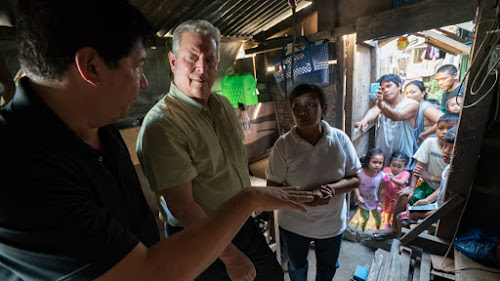


As for the ones that misfired or worse: Fox Searchlight spent $10.5 million for Patti Cake$, a supposedly winning dramedy about an overweight white female rapper from New Jersey, but critics largely rejected it for being predictably generic. An Inconvenient Sequel: Truth To Power continued the boring lecturing adventures of Al Gore about global warming but many questioned how the globetrotting aspect made it look cheap and at how Gore spends a lot of time giving himself a high five for his actions. The Yellow Birds was hailed for its cinematography from Daniel Landin (Under The Skin) but its heavy "war is hell" message and a waste of a mystery brought cat-calls. Alex Ross Perry struck out with Golden Exits, a boring romantic drama starring nobody's favorite actress Emily Browning. And last but not least, Taylor Sheridan moved away from his award-winning screenplay work to direct the seemingly disappointing Wind River, which has game hunter Jeremy Renner and FBI agent Elizabeth Olsen trying to solve a murder on a Native American reservation in the harsh winter of Wyoming.

Not a lot of buzz came from the documentary side of the festival this year besides mainly An Incovenient Sequel. The only other one that's interesting to talk about is Nobody Speak: Hulk Hogan, Gawker and Trials of a Free Press. This hastily produced picture of course talks about the timely news story of how retired professional wrestler Hulk Hogan helped take down a prominent gossip-mongering website after much scandal, largely thanks to a rich benefactor.

Finally, the super special secret screening this year wasn't for some awful, forgettable sci-fi movie but surprisingly for Get Out. A good pick for the festival and by all accounts a very praiseworthy film for our current times.
I could go on and talk about some more titles like Mudbound and Beach Rats but they have the usual stink of Sundance indie tripe. That, plus I just simply have no interest in talking about them. I also sadly don't have the urge to look at the Slamdance Film Festival this time around. Maybe next year, we will all have a great iteration of the Sundance Film Festival to wash away the two years of less-than-stellar efforts.
At last year's edition of the Cannes Film Festival, it concluded with an upset win and the overall celebration of global filmmaking was largely uneventful. Apparently, that thick air of disappointment has descended upon the festival again, as the Main Competition jury went completely opposite from the critical body and handed out prizes to films that were among the worst received with audiences. When you have a body presided over by George Miller and filled with the likes of Kirsten Dunst, Mads Mikkelsen, Vanessa Paradis, Donald Sutherland, Valeria Golino, and last year's Grand Prix winner László Nemes, you would think they would have chosen more wisely. Of course, my and other's opinions might change once these awarded films reach our viewing platforms but considering the close-to-being-severe outrage from professional observers, and the fact that previous big winner Dheepan just came out here in the States to a large meh response, I don't really see the tide turning at any time.

Legendary British director Ken Loach received the Palme d'Or for I, Daniel Blake much to his and everyone else's surprise. This win makes him one of the few double Palme winners in the history of the festival, as he won previously for The Wind That Shakes The Barley. Many theorized that Jimmy's Hall would have been Loach's last film, especially after its dismal reception here, but he was able to churn out another. Now, as for the film itself, it was politely respected but found a bit disposable, as it is just another one of his social realistic dramas, with a unhealthy dollop of depression on top. In this cookie-cutter entry, the titular character is fighting to earn disability benefits, only to be caught up by red tape and mismanagement. Along this sad path, he meets up with a single mother and her kids, who also are having problems dealing with the people controlling the welfare department. Sounds like a barrel of laughs, doesn't it?

The Grand Prix, a.k.a. the 2nd place ribbon, was stunningly given to It's Only the End of the World, the latest from the annoyingly smug Canadian director Xavier Dolan. He is sadly a prolific presence at this festival, earning a spot in 2015's main jury and last seen in the winner's circle in 2014 with his divisive Mommy a.k.a. the movie with the 1.1 aspect ratio. However, like fellow Cannes "favorite" Naomi Kawase, Dolan's reach and popularity does not extend beyond the French Riveria. His new whiny movie, involving an ailing writer who reunites with his family and expected tension come bubbling up, was lambasted and booed by critics and given some of the worst reviews of the entire festival. Further jeers came bellowing out when he was announced as the winner at the ceremony.

The Jury Prize, a.k.a. the bronze medal, went to American Honey, the long-awaited new film from Andrea Arnold (Red Road, Fish Tank). Clocking in at an outrageous time of 162 minutes, it is a road picture involving a reckless teenage girl who joins along in the wild and crazy adventures of some traveling magazine salesmen, including Shia LaBeouf, and getting caught up in a love affair amid all of the partying. Largely given a mixed response, the attention was more focused on newcomer Sasha Lane, who was lauded for her lead performance, and LaBeouf, who was expectedly sneered at for his scene-chewing actions.


Best Director went to a tie. First up was acclaimed Romanian director Cristian Mungiu for Graduation, a cagey drama where a doctor's daughter is too traumatized by a sexual assault to do well on an academic test, so he must bribe his way in order for her to succeed. Sharing in the accolade with Mungiu was Olivier Assayas for Personal Shopper, a strange horror thriller but played like a drama. Assayas teams up again with actress Kristen Stewart, who won a César in their last film together Clouds of Sils Maria, to craft a flick where Stewart plays a personal assistant/spirit medium who believes she is in contact with the ghost of her twin brother. Containing a long, long sequence where the heroine has a text message conversation with an unknown number on a train trip, the film was booed by the press (what film isn't here?) but earned minor press mainly for Assayas' audacity and Stewart's acting.

Best Screenplay normally goes to a serious downer but Asghar Farhadi's The Salesman is a straight up Iranian thriller. An acting couple, who perform daily as Willy and Linda Loman in a production of Death of a Salesman, move into a new apartment only for the wife to be surprise attacked by a stranger while in the shower. Hoping to help his loved one, the husband follows the clues until reaching an emotionally tense confrontation. Farhadi's frequent collaborator Shahab Hosseini also nabbed up the Best Actor award for the film.

Probably the most perplexing win other than the Palme was Best Actress being given to Jaclyn Jose for her performance in Ma' Rosa. Lambasted by critics for its dirty morality and ugly cinematography, the Filipino joint involves a connivence store couple who are arrested by the cops for selling meth and forced to have their own children get the hush money, by any means necessary, in order to bust them out. The fact that Jose beat out a large amount of competition this year is astonishing.

Now it comes time to talk about those that were unloved, starting with the big one: Toni Erdmann. This was the odds-on favorite to win it all, as it quickly became the breakout film of the entire festival. This three hour comedy (!) had crowds applauding with joy, as it chronicled a working woman who's hounded by her prank-playing father, only for him to leave for a bit and return as the titled figure, a so-called life coach who walks around in public wearing a bag wig and teeth. Despite earning the distinction of having the highest average critical rating in the history of Screen International with a 3.8, it was snubbed beyond belief. At least Sony Pictures Classics sees something in it, as they are set to distribute it later this year. Take that, Loach!


As for the others: Paul Verhoeven made his welcome return to the center stage with Elle, an f'ed up thriller starring Isabelle Huppert as a CEO who tracks down the rapist who attacked her and who she neglected to inform the police about; Nicolas Winding Refn finally unleashed The Neon Demon, a dark Hollywood fable where Elle Fanning is the new It Girl; Jeff Nichols went 2 for 2 this year with his second feature and Oscar hopeful Loving, with Joel Edgerton and Ruth Negga as the real-life interracial couple who fought the law for their love; Jim Jarmusch and Adam Driver came together like peanut butter and chocolate with Paterson, a slack existential journey into the week of a poetry-writing bus driver from New Jersey; Severe guffaws were handed out with Sean Penn's The Last Face, his sheer dumb attempt to have a torrid romance set during the Second Liberian Civil War; Park Chan-wook (Oldboy) returned to Korea and his normal grindhouse ways with The Handmaiden; Pedro Almodóvar showed off Julieta for the first time outside Spain, where its twisty melodrama and short story structure earned it some praise; The Dardenne Brothers returned to their usual spot in the Competition with The Unknown Girl, a serial murder mystery that is nothing like their usual work; Cristi Puiu (The Death Of Mr. Lazarescu) had to be the odd Romanian out, as his funeral family drama Sieranevada did him no favors with its eye-level cinematography and near three hour running time; Alain Guiraudie followed up his queer favorite Stranger By The Lake with Staying Vertical, an insane-sounding film where a young screenwriter is caught by sudden life changes, gay flirtation and surreal predicaments; Disturbing auteur Bruno Dumont tried and failed to do black comedy again with Slack Bay, which crosses a Romeo and Juliet scenario with cannibals; French actress Nicole Garcia continued her blah directorial effort with From The Land Of The Moon, a stupid sounding movie where Marion Cotillard has no life beyond going crazy at the sight of men and suffering from kidney stones; and finally Aquarius gave Sonia Braga a meaty role as the last tenant in an old apartment building.


Additional highlights and those in Un Certain Regard: Woody Allen opened the festivities with Café Society but his mediocre at best attempt at doing The Apartment with some gangsters thrown in was absolutely overshadowed by his disturbing interviews and a rape joke that was thrown at him at a party; Steven Spielberg premiered The BFG, whose early word is that it works as an average fantasy flick riddled with CGI; Chris Pine and Ben Foster robbed banks and had shootouts with Texas Ranger Jeff Bridges in Hell or High Water, David Mackenzie's follow-up feature to Starred Up; Studio Ghibli and Wild Bunch showed off their animated collaborated effort The Red Turtle; Hirokazu Koreeda was relegated to the minor leagues this year with the feel-good dramedy After The Storm; and The Happiest Day In The Life of Olli Mäkiwon, Finland's answer to Rocky but shot in 16mm B&W, won the Un Certain Regard Award.
This year's Cannes Film Festival ended with a shocking win but for the most part was largely uneventful. The only major news story from the event didn't come from any of the films but from the controversy of several female viewers being delayed at screenings because they weren't wearing high heels, apparently breaking a so-called unwritten rule of the festival. As for the films, save for a couple of acclaimed features, a colossal failure, and a 3D porno, the selection was mixed at best. The Coen Brothers were the Presidents of the Main Competition jury and had an eclectic body to preside over: actor Jake Gyllenhaal; actresses Sophie Marceau, Sienna Miller, and Rossy de Palma; directors Guillermo de Toro and Xavier Dolan; and strange outsider/singer-songwriter Rokia Traoré. After viewing the 19 films, they proceeded to give out the awards in a most puzzling fashion.

The Palme d'Or was given to Dheepan, much to the chagrin of film critics everywhere. The French movie was directed and co-written by Jacques Audiard, best known for A Prophet and his last Cannes entry Rust and Bone. The film follows three Tamil strangers, one of whom was formerly a child soldier, as they escape Sri Lanka and pose as a family in France. Though lightly praised, it was mocked for its strange concluding moments, where the somber drama suddenly turns into an action affair.

The Grand Prix, a.k.a. the 2nd place ribbon, was given to Son of Saul, a movie that I expectedly rolled my eyes upon first hearing (it's another Holocaust drama) but was met with a ton of acclaim post-premiere. The debut feature of László Nemes, the Hungary film in set in Auschwitz, where a Sonderkommando tries to perform the Jewish last rites on a body he believes to be his son, all the while his fellow forced laborers plan an uprising. Though other films have told the story of the Sonderkommandos before (The Grey Zone comes to mind), this film was lauded for its horrific quality and its expert cinematography and soundtrack. Expected to be the odds-on favorite to win the Palme, it instead wound up missing the chance to rip the tape.

The Jury Prize, a.k.a. the bronze medal, went to The Lobster, the latest from international cult favorite Yorgos Lanthimos (Dogtooth). His English-language debut, the surreal sci-fi rom-com has Colin Farrell must search all over a hotel for mate within a 45-day time limit or else risk being turned into an animal. With that plot description, I am already right on board to check this one out. The film also picked up the Grand Jury Prize for the Palm Dog Award and a special mention for the Queer Palm.

Best Director went to Hou Hsiao-Hsien for The Assassin, a wuxia flick that had film lovers salivating due to its cinematography. Some critics even went as far as calling it the most beautiful film ever made. It too was highly favored to win, most likely ending up with the Grand Prix, but it just missed the podium.

Best Screenplay of course always goes to a downer, with this year being handed off to Chronic. Tim Roth stars as a possibly deranged nurse working in the ward for the terminally ill. Roth was pointed out as the only highlight of the dour drama.

César-bridesmaid Vincent Lindon finally got to earn a major win for once, taking the Best Actor award for his performance in The Measure of a Man. Here, he plays an unemployed man desperately looking to provide for his family, only to gain the position as a security guard of a department store and slowly start to unravel.


Best Actress yet again was split between two performers but not from the same movie this time around. First up was Rooney Mara for her work Carol, the latest from Todd Haynes. The most acclaimed film of the entire festival, the romantic drama had Mara playing a department store clerk in the 1950's, as she enters into an affair with Cate Blanchett. Observers predicted the film to be next Blue is the Warmest Color, winning the Palme and either a special award or this category for Mara and Blanchett. The jury had other plans, however, and only Mara was praised. Her co-owner of the title was Emmanuelle Bercot, who plays a woman caught up with the highs and lows of love in Maïwenn's Mon roi. Reading from some notices, it looks like both the film and her acting are completely overwrought, telling nothing new or worthy enough to win in a category. The award was a 2nd honor for Bercot this year, as her latest directed film Standing Tall was selected to be the opening film of the festival.

Before we go over the other unloved films in the Main Competition, let's talk about the elephant in the room: Gus Van Sant's The Sea of Trees. The movie had a famous director, a pedigreed cast (Matthew McConaughey, Ken Watanabe, Naomi Watts), and was set in the "Suicide Forest", a real-life area in Japan where many people venture to in order to kill themselves. And it was booed out of the building. It was so badly received, it was earning below one-star ratings in the polls. Many jeered at its screenplay, for its long monologues and twist ending; in the case of the latter, critics alluded to it as being somewhere between M. Night Shyamalan and Nicolas Sparks. What did you expect from Chris Sparling, the guy whose last produced script was ATM?


Now, as for the others: Matteo Garrone (Gomorrah) furthered his experimental side with Tale of Tales, a fantasy-horror film consisting of three pre-Grimm fairy tales; Denis Villeneuve’s Sicario, about a FBI agent trying to take down Mexican drug cartels, unnerved some critics but Emily Blunt's passive lead performance and Roger Deakins' cinematography earned raves; Michael Fassbender got to do Shakespeare with the latest filmed adaptation of Macbeth; Hirokazu Koreeda returned with Our Little Sister, an adaptation of a shoujo manga about a trio of female siblings taking in their unknown half-sister; Italian film My Mother had a hard time picking a tone, as it jumps between a satire about moviemaking and a sober drama about a dying parent; Joachim Trier (Oslo, August 31st) returned with Louder Than Bombs, his English-language debut about a family trying to come to terms with the suicide of their mother/wife; Jia Zhangke's Mountains May Depart continued his sharp attacks on China's masking of capitalism through communism; Paolo Sorrentino tripped up with Youth, where Michael Caine and Harvey Keitel hang out at a spa; Valley of Love has Isabelle Huppert and Gérard Depardieu wandering around Death Valley for dumb reasons; and one of Truffaut's forlorn projects was brought to life in Marguerite & Julien, an incest drama that was thankfully derided by viewers.


Additional highlights and those in Un Certain Regard: Rams, a dramedy about two estranged brothers coming together to save their flock, won the Un Certain Regard Award; French provocateur Gaspar Noé premiered his 3D autobiographical porno Love but the unsimulated sex scenes couldn't overtake its terrible script and acting; People got to have their first taste Inside Out and Irrational Man, with many praising the former more over the latter; Jeremy Saulnier followed up Blue Ruin with the premiere of Green Room, where a punk rock band tries to fight their way out of a bar filled with skinheads, who are led by none other than Patrick Stewart (!); Takashi Miike unleashed Yakuza Apocalypse, a gonzo yakuza flick filled with vampires, kappas, and a mascot-wearing badass; Kiyoshi Kurosawa won Best Director for Un Certain Regard yet had everybody snoring with his low-key ghost drama Journey to the Shore; and Apichatpong Weerasethakul was regulated to the minor leagues for no real reason yet earned his usual praise for Cemetery of Splendor.


